

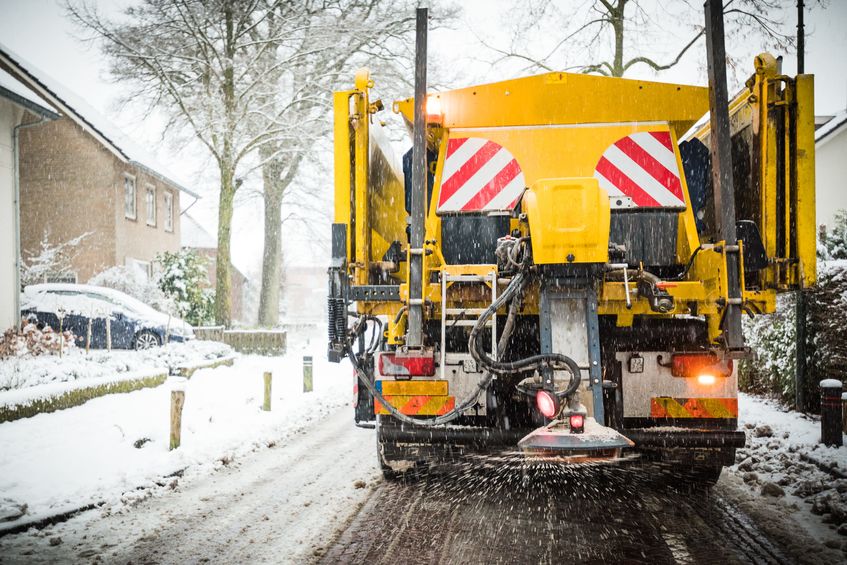
 During the winter months, road salt and other de-icing treatments play an important role in keeping roads passable. By helping melt snow and ice, these treatments improve traction and reduce some winter driving risks. Even so, treated roads are not always as safe as they appear. The way salt and de-icing materials interact with snow, ice, and pavement can create changing conditions that affect how vehicles respond on the roadway.
How De-Icing Treatments Improve Road Conditions
Road salt is commonly used to lower the freezing point of water. When applied to icy or snow-covered roads, it helps break the bond between ice and the pavement, making it easier for vehicles to maintain traction. Other de-icing materials, such as liquid brines or chemical treatments, work in a similar way.
These treatments are especially effective when applied early, before ice has a chance to build up. In many cases, they help prevent roads from becoming completely covered in ice, thereby significantly reducing the likelihood of widespread traction loss.
When Treated Roads Can Still Be Slippery
Even when salt or de-icing agents are applied, road surfaces are not always completely clear. Slush can form as snow and ice begin to melt, creating a thin, wet layer on the roadway. This mixture can reduce tire traction and make steering and braking less predictable.
In some cases, the treatment may not be evenly distributed across the road. Certain areas, such as intersections, shaded spots, or less-traveled lanes, may remain icy while others are clear. This variation can make it difficult for drivers to anticipate changes in traction.
Refreezing and Changing Conditions
One of the most common issues with de-icing treatments is refreezing. As temperatures drop, melted snow and water can freeze again, sometimes forming thin layers of ice that are difficult to see. This can happen overnight or in shaded areas where sunlight does not reach the road.
These changing conditions mean that a road that appears wet or clear may still be hazardous. Refreezing can create uneven surfaces that affect how vehicles respond, especially during braking or turning.
Residue and Road Surface Effects
After salt and other treatments have been applied, a residue can remain on the road surface. This residue can mix with moisture, forming a film that may feel slick under certain conditions. While it is not the same as ice, it can still affect tire grip on the road.
In addition, the presence of salt can highlight uneven pavement or existing road damage as snow melts away. This can expose potholes or rough surfaces that impact vehicle stability.
When Treated Winter Roads Still Lead to Accidents
Road salt and de-icing treatments are important for maintaining winter road safety, but they do not eliminate all hazards. Slush, uneven coverage, and refreezing can all affect traction and visibility, even on treated roads.
If you ever find yourself dealing with the aftermath of an accident in winter conditions, it is important to understand what really happened. Here at 4N6XPRT Systems, we have sophisticated tools, including forensic car accident reconstruction software and point cloud models, that can provide valuable insights. Our software is highly accurate, giving you the information you need for court, insurance, or other purposes. Give us a call at (619)464-3478 to learn more about how we can help today.