

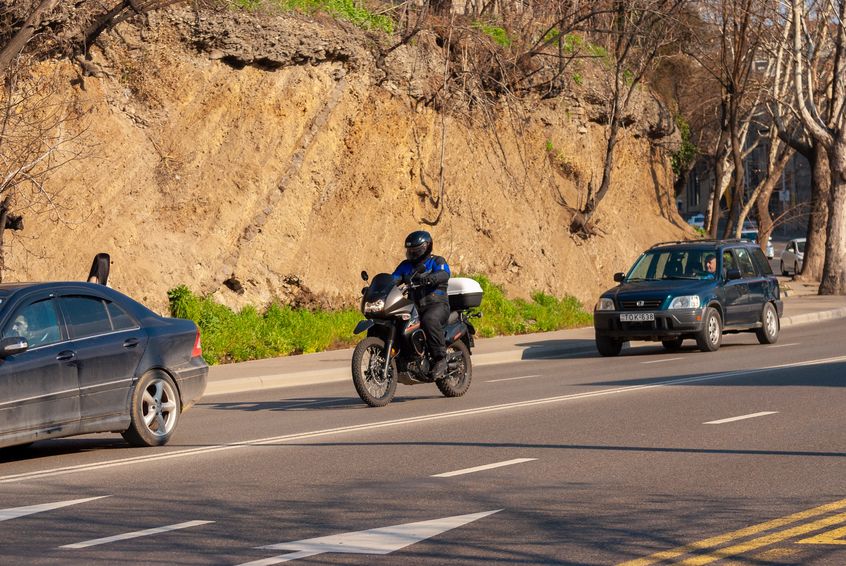
 Spring often brings more motorcycles back onto the road. Warmer temperatures and longer days make it a popular time for riders to get out again, but spring weather and road conditions can also create new hazards that are easy to overlook. Even when the forecast seems mild, changing conditions can affect traction, visibility, and roadway safety in ways that matter even more for motorcycles.
Because motorcycles have two wheels, not four, in contact with the road like passenger vehicles, even small surface changes can have a bigger impact on stability and control.
Wet Roads and Reduced Traction
Spring rain is one of the most common hazards riders face this time of year. Wet pavement can reduce traction, especially during the first rainfall after a dry stretch. Oil, dirt, and other road residue can mix with water, creating a slick surface that makes braking and turning less predictable.
This can be especially dangerous at intersections, curves, and other areas where riders need precise control over speed and direction.
Potholes and Uneven Pavement
Winter weather often leaves roads in rough condition by spring. Potholes, cracked pavement, and uneven surfaces may be more than just an inconvenience for motorcyclists. A surface defect that might feel minor in a passenger vehicle can upset a motorcycle’s balance or force a sudden correction.
Loose gravel from road damage or seasonal repairs can also create hazards, especially on turns or at lower speeds where stability matters most.
Changing Visibility Conditions
Spring weather can shift quickly from sun to rain, fog, or overcast skies. Glare from low sunlight, wet pavement reflections, and foggy mornings can all reduce visibility. For motorcyclists, this matters not only for seeing the road ahead, but also for being seen by other drivers.
Limited visibility can make it harder to spot lane markings, standing water, roadway debris, or surface changes that affect safe travel.
Standing Water and Road Debris
Spring showers can leave standing water on roads, especially in low spots or areas with poor drainage. For motorcycles, even shallow water can hide potholes, uneven pavement, or debris. Leaves, branches, and other storm-related debris can also collect on the road and reduce traction.
These conditions can change quickly, so a road that looked clear earlier may not remain so for long.
Construction and Seasonal Road Repairs
Spring is also a common time for roadwork. Temporary lane shifts, rough pavement, steel plates, loose gravel, and new striping can all affect how a motorcycle handles. Construction zones may also introduce sudden changes in traffic flow or roadway width.
For riders, these changing conditions can require more caution, especially in unfamiliar areas.
When Spring Road Conditions Play a Role in Motorcycle Accidents
Spring riding conditions can look harmless at first, but rain, potholes, debris, and changing visibility can all contribute to motorcycle accidents. When questions come up after a crash, those roadway and weather details can matter more than many people realize.
While all of these road and weather conditions can affect four wheeled vehicles too, motorcycles are often more vulnerable to reduced traction, uneven pavement, and sudden visibility changes. Here at 4N6XPRT Systems, we offer sophisticated tools, including forensic car accident reconstruction software and point cloud models, that can provide valuable insight into what happened at a crash scene. We also offer Individual Vehicle Data Search Services, including basic motorcycle dimensions by specific vehicle. Our tools provide accurate information for court, insurance, and technical analysis. Give us a call at (619)464-3478 to learn more about how we can provide the data and documentation you need.